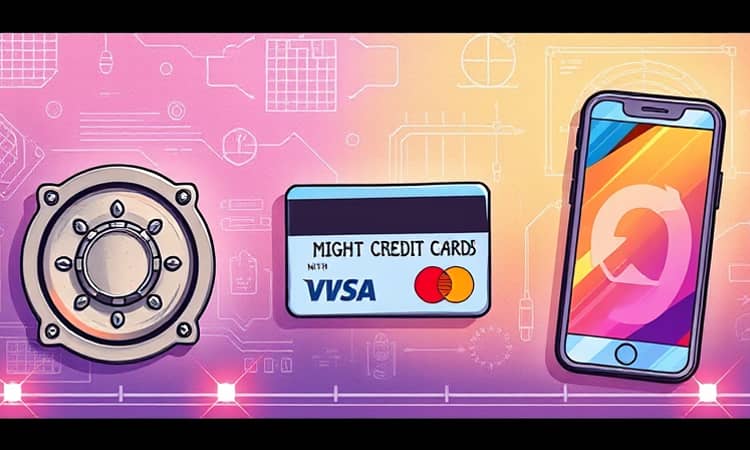
The journey of credit cards is more than a story of plastic and numbers—it is a testament to human ingenuity in shaping commerce. From trust-based barters to near-instant digital payments, each innovation has redefined how we exchange value.
The Early Roots of Credit
Long before cards, societies relied on trust-based systems for delayed payments. In ancient Mesopotamia, farmers received seed on credit and repaid after harvest, illustrating the earliest forms of borrowing. These informal arrangements laid the foundation for formal credit.
By the late 1800s, merchants began issuing charge coins—metal and celluloid tokens used at department stores and oil stations. In 1914, Western Union introduced metal charge plates, which featured account details embossed on metal. These heavy plates were the forerunners of the modern credit card, accepted widely through the 1930s and 1940s.
The Birth of Modern Cards
The 1930s and 1940s saw the emergence of specialized credit devices. In 1934, the Air Transport Association and American Airlines launched the Air Travel Card, allowing travelers to book flights on credit. This system expanded to multiple airlines by the 1940s.
In 1946, a Brooklyn banker introduced the “Charg-It” card, enabling local purchases backed by bank funds. Just four years later, the Diners Club card appeared in 1950, offering the first universal acceptance at multiple merchants and sparking the modern credit industry.
- 1951: Franklin National Bank issues the first bank card program.
- 1958: BankAmericard debuts, pioneering revolving credit.
- 1966: Interbank Card Association (later Mastercard) forms.
Technological Breakthroughs
In 1959, American Express unveiled the first plastic PVC credit card, replacing paper and cardboard. Throughout the 1960s and 1970s, merchants used manual imprinters—nicknamed “zip-zap” machines—to capture card details on carbon slips.
A landmark moment arrived in 1969 when an IBM engineer embedded the first magnetic stripe on a card, enabling machines to read data electronically. Soon after, Visa introduced the first point-of-sale terminals, boosting transaction speed and accuracy.
Global Adoption and Rewards Culture
The 1960s and 1970s heralded international expansion for Visa and Mastercard, bringing electronic payments to Europe, Mexico, and Japan. By 1984, Diners Club launched the first rewards scheme, demonstrating that cardholder incentives drive consumer loyalty.
- Global network growth throughout Europe and Asia.
- Introduction of tiered reward levels and cashback.
- Collaboration with airlines and hotels for travel perks.
Digital Transformation and Security
In the 1990s, Europay, Mastercard, and Visa developed EMV smart chips, embedding encrypted microprocessors to combat fraud. The United States embraced chip cards widely after 2015, shifting liability for fraudulent charges to merchants who failed to upgrade.
Mastercard introduced CVV codes in 1997, a three- or four-digit security feature for card-not-present transactions. Soon after, contactless cards emerged in Korea in 1995, leveraging radio frequency to enable tap-to-pay.
The real game-changer was the rise of NFC technology and mobile wallets. Apple Pay and Google Pay appeared after the Apple App Store launched in 2008, giving consumers convenient phone-based tap-to-pay options and redefining checkout experiences.
Economic Impact and Usage Today
As of 2024, U.S. consumers collectively carry $1.07 trillion in credit card debt, with an average balance of $6,501. The ubiquity of cards has reshaped spending habits worldwide, as cashless transactions become the norm in retail, dining, and eCommerce.
Online sales began in 1994, and today credit cards are indispensable to digital commerce. Modern POS systems integrate inventory management, loyalty programs, and real-time analytics, making transactions seamless for merchants and cardholders alike.
This relentless innovation underscores how credit cards remain central to global commerce, enabling instant transactions across borders and platforms.
Challenges and the Road Ahead
Despite advancements, fraud persists. Skimming devices, data breaches, and identity theft fuel continuous efforts in tokenization and biometric authentication. The next frontier may see fingerprint or retinal scans replacing physical cards entirely.
Wearables and phone-based payment systems are already displacing plastic, particularly among younger demographics. As digital wallets grow, traditional cards may evolve into virtual credentials stored securely on devices.
Looking forward, artificial intelligence and machine learning promise real-time fraud detection and dynamic credit limits, further safeguarding consumers. Ultimately, the evolution from metal plates to digital wallets exemplifies our drive toward faster, safer, and more convenient payments.